
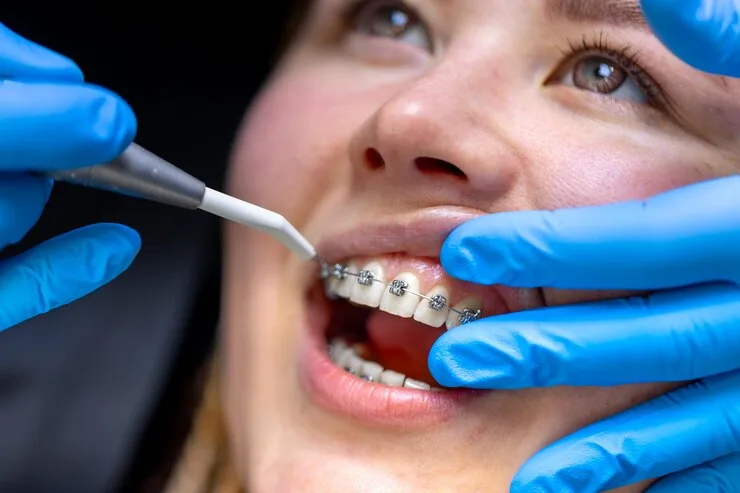
Advanced orthodontic applications include treatment approaches where both teeth and jaw structures are evaluated and planned at a more complex level. These approaches aim not only to align the teeth but also to balance jaw relationships and facial profile.
They are generally considered in cases that cannot be fully resolved with standard orthodontic methods or that require more detailed planning.
When Are They Considered?
Advanced orthodontic applications are evaluated in cases with more comprehensive orthodontic needs.
These may include severe dental crowding, jaw discrepancies, bite (occlusion) disorders, previously treated cases requiring re-evaluation, and situations where both dental and jaw relationships must be addressed together.
Such conditions require detailed analysis and planning.
What Do Advanced Orthodontic Approaches Include?
These applications may involve a combination of different orthodontic and supportive methods.
They can include comprehensive orthodontic treatment planning, jaw guidance with functional appliances, digital orthodontic analysis and simulations, and combined treatment approaches.
These methods allow for a more holistic treatment process.
How Is the Treatment Process Planned?
In advanced orthodontic cases, the planning process is more detailed.
A comprehensive analysis of the teeth and jaw structure is performed, bite relationships are evaluated, facial and profile balance is assessed, and the treatment is planned in stages.
These analyses help ensure a controlled and effective treatment process.
Why Is Detailed Planning Necessary?
In advanced orthodontic cases, even small changes can affect the overall balance.
For this reason, both dental and jaw relationships are evaluated together, functional and aesthetic balance is considered, and long-term outcomes are prioritized.
This approach supports a more stable and balanced treatment process.
What Should Be Considered in Daily Life?
Oral care habits are essential during orthodontic treatment.
Regular brushing, proper interdental cleaning, protecting orthodontic appliances, and attending routine check-ups all help support the treatment process.
Is It Necessary for Everyone?
Advanced orthodontic applications may not be necessary for every individual.
The severity of the condition is evaluated, functional needs are assessed, and individual expectations are taken into account.
Therefore, the treatment plan is determined on a personalized basis.
Frequently Asked Questions
What does advanced orthodontic treatment mean?
It refers to orthodontic approaches that require more comprehensive and detailed planning.
Does it take longer?
It may take longer depending on the complexity of the case.
Does every orthodontic problem fall into this category?
No, it is only considered in complex cases.
Are the results permanent?
Results depend on individual factors and maintenance habits.