
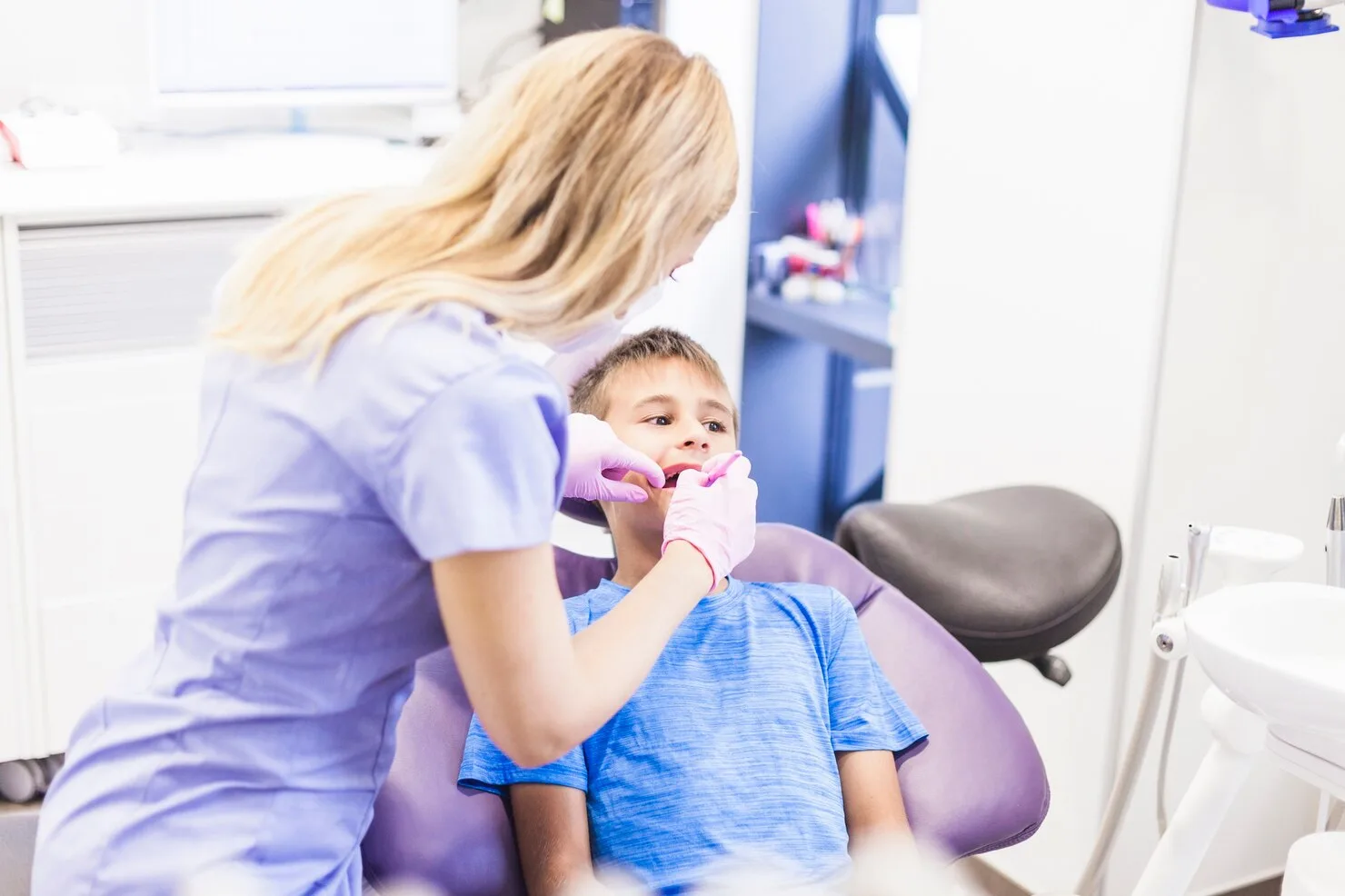
A fissure sealant is a preventive method applied to protect the grooves and pits located on the chewing surfaces of back teeth. It is also commonly known as a “dental sealant.”
The aim of this application is to cover the deep grooves on the tooth surface and reduce food accumulation and bacterial formation in these areas. In this way, the risk of cavity formation can be reduced.
Why May a Fissure Sealant Be Necessary?
The natural grooves (fissures) on the chewing surfaces of back teeth can create areas that are difficult to clean.
There may be areas that are difficult for a toothbrush to reach
Food residues can accumulate in these areas
Bacterial formation may become easier
These conditions may increase the risk of cavities.
On Which Teeth Is It Applied?
Fissure sealants are generally applied to teeth with wide and grooved chewing surfaces.
Newly erupted permanent molars
Back teeth with a high risk of cavities
Teeth with deep fissure structures
This application is especially considered for preventive purposes during childhood.
How Is a Fissure Sealant Applied?
Fissure sealant application is a preventive procedure performed without damaging the tooth surface.
The tooth surface is cleaned
The application area is prepared
The protective material is placed into the fissures
The material is fixed to seal the surface
This process creates a protective layer on the tooth surface.
How Long Is It Effective?
Fissure sealants may wear down or detach over time. Therefore, regular check-ups are important.
It should be checked at regular intervals
It can be renewed when necessary
Oral care habits may influence its effectiveness
Regular follow-up helps maintain its protective function.
What Should Be Considered After Application?
Daily oral care habits remain important after the procedure.
Regular tooth brushing
Limiting sugary foods
Being cautious with hard foods
Not skipping dental check-ups
These habits help maintain long-term dental health.
Frequently Asked Questions
Is fissure sealant a painful procedure?
No. It is generally painless and completed in a short time.
Does a dental sealant completely prevent cavities?
It helps reduce the risk but is not sufficient on its own.
Should it be applied to every child?
It is evaluated based on cavity risk and tooth structure.
Is it permanent?
It may wear over time and should be checked regularly.