
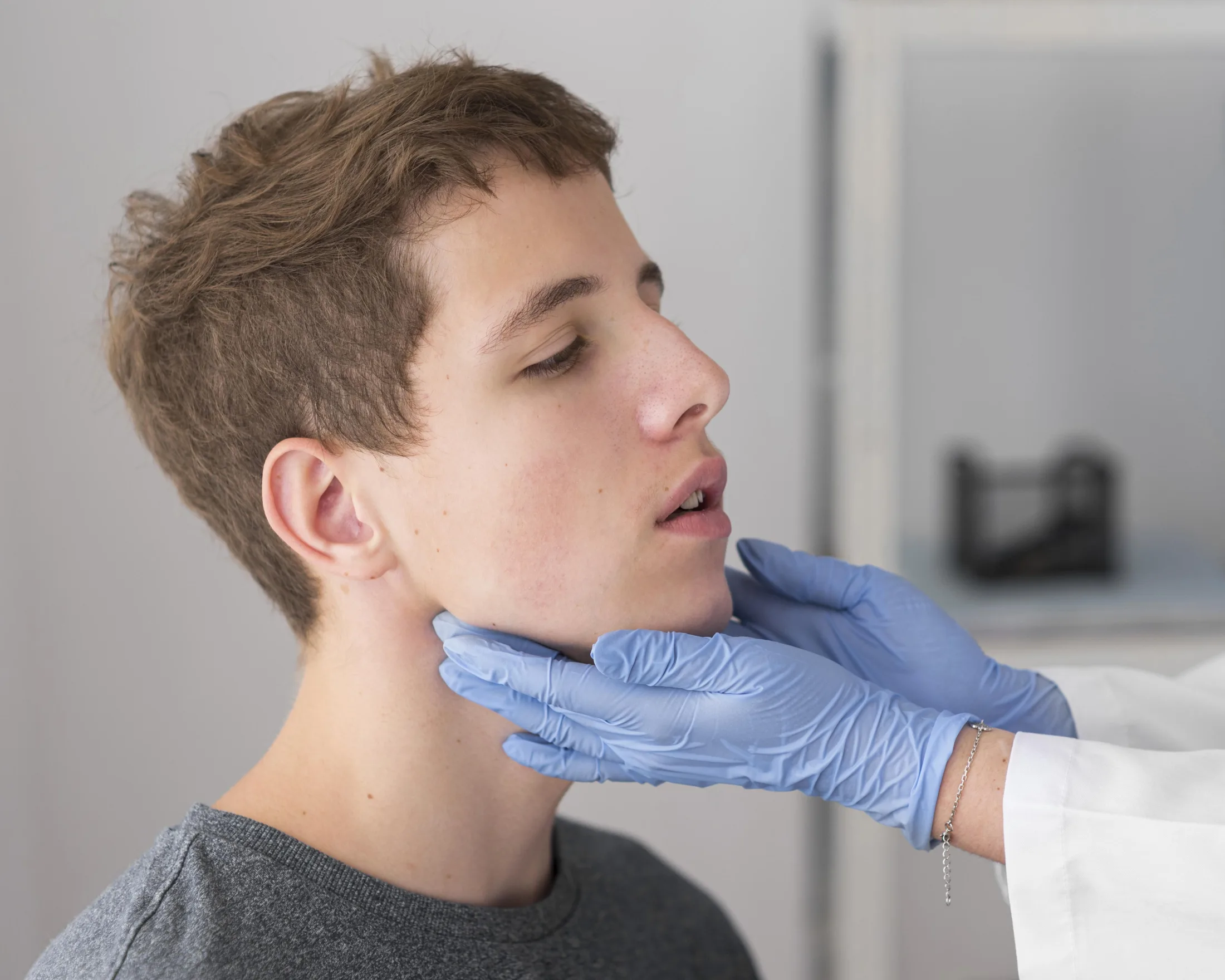
Mandibular protrusion or retrusion refers to the forward or backward positioning of the lower jaw relative to the upper jaw. This condition can affect the harmony between the jaw bones and alter the bite relationship.
When the lower jaw is positioned forward, it is referred to as mandibular protrusion, while a backward position is defined as mandibular retrusion.
Why Does It Occur?
These types of jaw discrepancies usually result from multiple contributing factors.
They may be influenced by genetic predisposition, imbalances in jaw development, habits developed during childhood, improper eruption of teeth, and breathing or swallowing patterns.
These factors can affect the natural development of the jaw structure.
What Symptoms Can Be Seen?
Mandibular protrusion or retrusion may present with both aesthetic and functional signs.
These may include differences in facial profile, misalignment in bite, difficulty during chewing, changes in speech for certain sounds, and discomfort in the jaw joint.
Symptoms can vary from person to person.
How Is It Evaluated?
The evaluation of jaw discrepancies is not limited to tooth alignment alone.
The relationship between the upper and lower jaw is analyzed, bite contact points are examined, facial and profile structure are assessed, and jaw movements are observed.
These analyses help identify the underlying cause of the problem.
How Is It Treated?
The treatment approach varies depending on the individual’s age, stage of jaw development, and severity of the condition.
Orthodontic treatment methods, functional appliances, and growth-guided approaches may be used. In some cases, alternative treatment options may be considered.
Treatment planning is always personalized.
At What Age Should It Be Treated?
Early evaluation is important, especially in individuals whose jaw development is still ongoing.
Guidance may be provided during childhood and adolescence, while different approaches may be required for adults.
Therefore, early orthodontic assessment is essential.
What Should Be Considered in Daily Life?
Certain habits are important for maintaining jaw health.
Avoiding one-sided chewing, being aware of teeth clenching or grinding, maintaining good oral hygiene, and attending regular check-ups all help support balance within the oral structure.
Does Every Case Require Treatment?
Not every jaw discrepancy requires active treatment.
The severity of the condition is evaluated, functional effects are assessed, and planning is based on individual needs.
For this reason, treatment decisions are made on a case-by-case basis.
Frequently Asked Questions
Can mandibular retrusion correct itself?
It may vary depending on the growth period, but in most cases, monitoring is required.
Does mandibular protrusion affect speech?
In some cases, it may influence pronunciation.
How long does treatment take?
The duration varies depending on the selected method and individual condition.
At what age is treatment more effective?
Evaluations during the growth period are particularly important.