
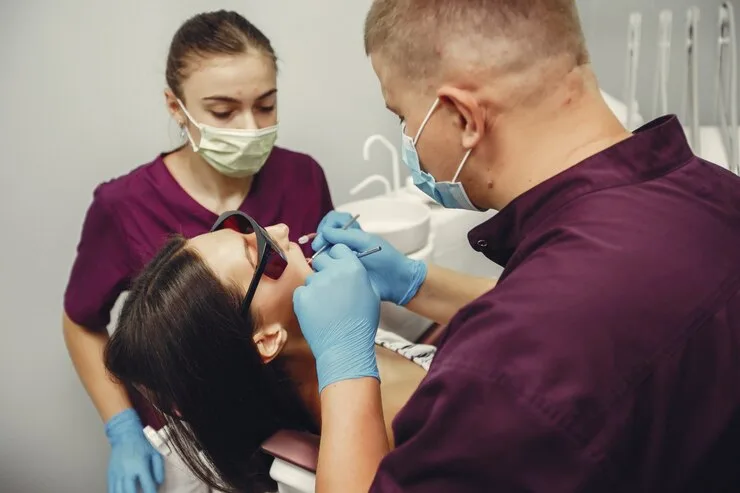
Upper jaw narrowness refers to a condition where the upper jaw is not sufficiently wide compared to the lower jaw. This can affect tooth alignment and bite relationships. It may present with crowding in the back teeth, a narrow dental arch, and certain bite problems.
This condition is not only aesthetic but can also be related to chewing and overall oral function.
Why Does Upper Jaw Narrowness Occur?
Upper jaw narrowness can develop due to various factors.
These may include genetic factors, insufficient jaw development, prolonged mouth breathing, habits such as thumb sucking, and early loss of primary teeth.
Such factors can influence the proper development of the upper jaw.
What Symptoms Can Be Seen?
Upper jaw narrowness may present with noticeable signs in some cases.
These can include crowded teeth, a narrow alignment of the upper teeth, the lower teeth positioning outside the upper teeth (crossbite), imbalance during chewing, and habitual mouth breathing.
These symptoms may require orthodontic evaluation.
How Is It Evaluated?
During evaluation, both the teeth and jaw structure are analyzed together.
The relationship between the upper and lower jaw is assessed, tooth alignment is examined, jaw width is measured, and bite relationships are evaluated.
These analyses help determine the most appropriate approach.
How Is Upper Jaw Narrowness Treated?
The treatment approach varies depending on the individual’s age and stage of jaw development. The goal is to expand the upper jaw and create sufficient space for proper tooth alignment.
This may involve jaw expansion appliances, functional orthodontic approaches, and growth-guided interventions.
Treatment planning is personalized for each individual.
At What Age Should It Be Treated?
Upper jaw narrowness can be more easily managed during the growth period.
Evaluation during childhood and adolescence is important, as intervention can be more effective while jaw development is still ongoing.
For this reason, early orthodontic assessment plays a key role.
What Should Be Considered in Daily Life?
Certain habits are important for supporting healthy jaw development.
Recognizing and addressing mouth breathing, maintaining regular tooth brushing, controlling harmful habits, and attending routine dental check-ups all contribute to oral and jaw health.
Does Every Case Require Treatment?
Not every case of upper jaw narrowness requires active treatment.
The severity of the condition is evaluated, functional effects are assessed, and planning is based on individual needs.
Therefore, the treatment decision is made on a case-by-case basis.
Frequently Asked Questions
Can upper jaw narrowness correct itself?
It usually does not resolve on its own but may be guided if identified early.
Is jaw expansion painful?
A mild pressure sensation may occur.
Is treatment possible in adults?
It can be evaluated with different methods depending on the case.
How long does treatment take?
The duration varies depending on the individual condition.