
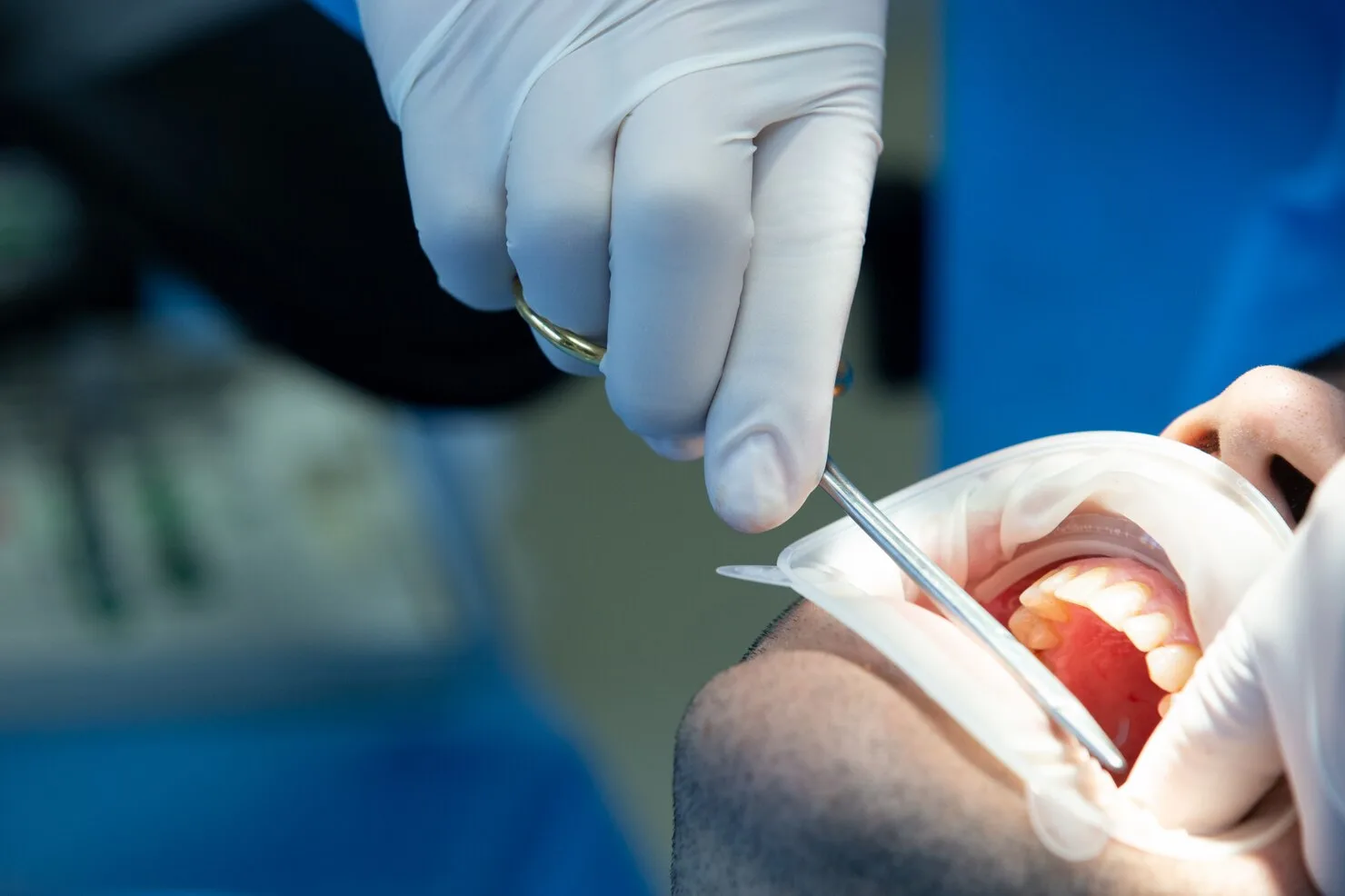
Apical resection refers to the surgical removal of infected tissues or cystic structures formed at the tip of the tooth root. It is generally considered in teeth that have undergone root canal treatment but still have persistent issues at the root tip.
The aim of this procedure is to remove the problematic area in a limited manner instead of extracting the tooth completely, allowing the tooth to be preserved in the mouth.
Why Do Root-End Problems Occur?
Problems at the tip of the tooth root are mostly caused by infection. This condition may develop due to various reasons.
Persistence of infection despite root canal treatment
Incomplete cleaning of the root canal structure
Bacterial accumulation around the tooth root
Damage caused by trauma
These factors may lead to the formation of inflamed or cystic structures at the root tip.
Which Symptoms May Require Apical Resection?
Problems in the root-end region may sometimes progress without symptoms. However, in some cases, the following complaints may occur:
Pressure or pain around the tooth
Swelling in the gum area
Sensitivity during chewing
Recurring signs of infection
In some cases, the problem may only be detected during radiological examinations.
How Is Apical Resection Performed?
Apical resection is planned as a surgical procedure and focuses on the tip of the tooth root.
Access to the root tip is achieved through the gum
Infected or cystic tissue is removed
A portion of the root tip is excised
The area is properly closed
This procedure aims to eliminate the problem while preserving the remaining structure of the tooth.
Is Apical Resection Necessary in Every Case?
This procedure is not required for every root canal treated tooth. It is only considered in specific cases.
If healing is not achieved despite root canal treatment
If a persistent lesion is present at the root tip
If preserving the tooth without extraction is the goal
A separate evaluation for each case is important.
What Should Be Considered After the Operation?
After the surgical procedure, attention to certain points is necessary for a healthy healing process.
Protecting the treated area
Avoiding hard foods
Maintaining oral hygiene
Protecting the area from trauma
The healing process may vary from person to person.
Frequently Asked Questions
Is apical resection a painful procedure?
It may vary depending on the procedure process and individual condition.
Does every root-end cyst require surgery?
No. Surgical intervention may not be necessary in every case.
Does this procedure save the tooth?
The aim is to preserve the tooth, but outcomes depend on the condition of the tooth.
Is swelling expected after the operation?
In some cases, temporary swelling may occur.