
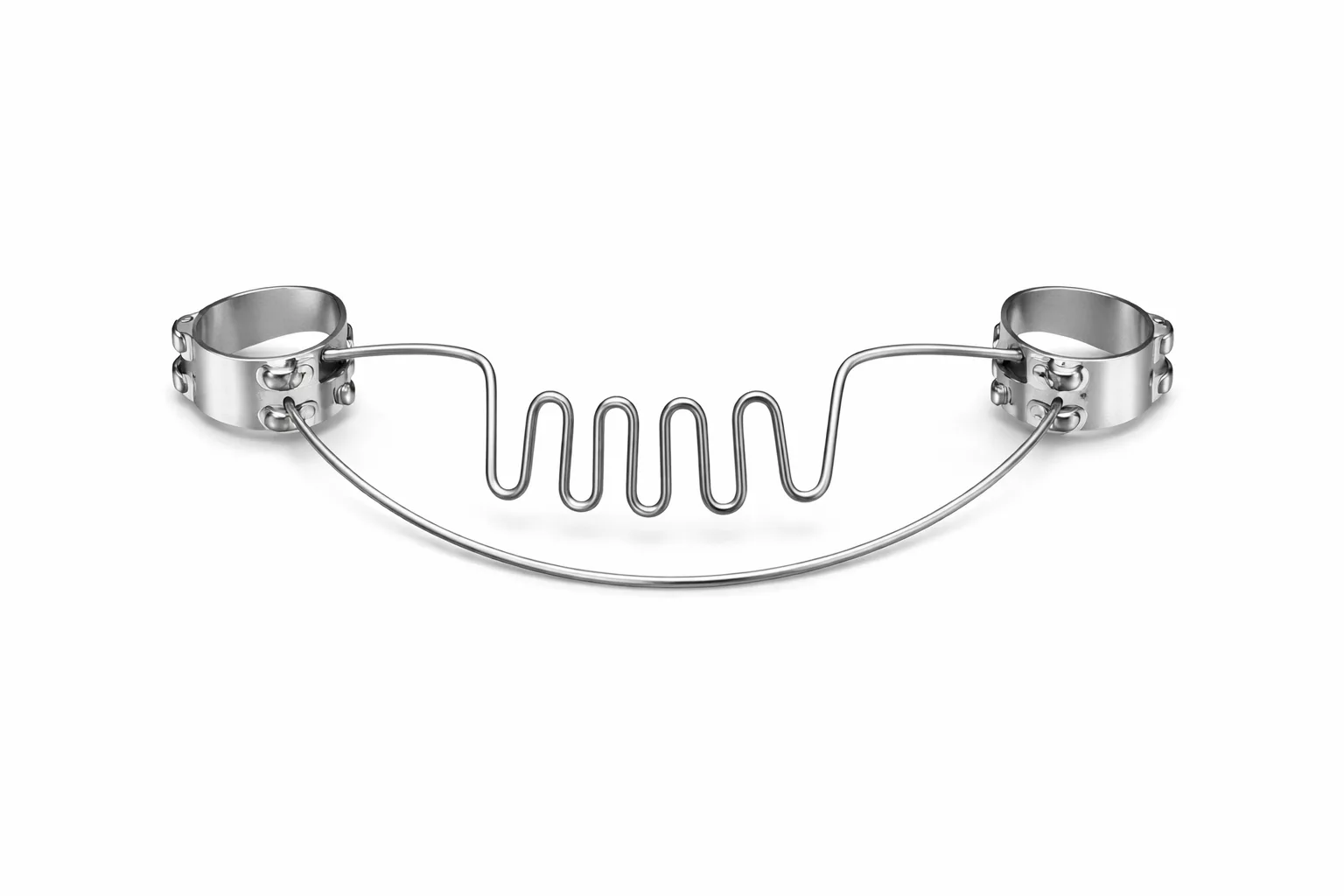
Habit-breaking appliances are orthodontic devices designed to reduce the effects of habits such as thumb sucking and improper swallowing (tongue thrusting) on dental and jaw development. These appliances help guide oral muscles and behaviors, supporting natural growth and development.
Which Oral Habits Are Involved?
Certain habits during childhood, if prolonged, can affect teeth and jaw structure.
These include thumb sucking, tongue thrusting (incorrect swallowing), prolonged pacifier use, and mouth breathing.
Such habits can lead to changes in tooth alignment and jaw development.
How Do These Habits Affect Dental Structure?
Long-term habits can alter the balance of forces within the mouth.
Teeth may tilt forward, gaps may develop between teeth, jaw growth may be affected, and bite problems can occur.
For this reason, early identification is important.
How Do These Appliances Work?
Habit-breaking appliances work by making the habit physically difficult or preventing it.
They include specially designed structures placed inside the mouth, limit the continuation of the habit, and help position the tongue and muscles correctly.
Over time, this supports the discontinuation of the habit.
When Are They Used?
These appliances are considered when habits begin to affect dental and jaw development.
They may be recommended in cases of prolonged thumb sucking, tooth alignment problems related to tongue thrusting, and habits associated with bite disorders.
Each child is evaluated individually.
How Does the Treatment Process Progress?
The process begins with evaluating the child’s oral structure and habits.
An intraoral analysis is performed, the appropriate appliance is selected, the usage plan is created, and progress is monitored through regular check-ups.
Both physical and behavioral changes are targeted during this process.
What Should Be Considered in Daily Use?
Regular use and proper hygiene are essential for effectiveness.
The appliance should be used as recommended, oral hygiene should be maintained, regular check-ups should not be missed, and the child’s adaptation to the process should be supported.
Family support plays an important role in this stage.
What Is the Adaptation Process Like?
There may be an initial adjustment period when starting to use the appliance.
A feeling of fullness in the mouth, temporary changes in speech, and mild discomfort may occur.
Children usually adapt quickly, and these effects tend to decrease over time.
Is It Necessary for Every Child?
Not every oral habit requires an appliance. In some cases, behavioral approaches may be sufficient.
The duration and severity of the habit are evaluated, the dental and jaw structure is examined, and planning is made according to individual needs.
Therefore, the decision is personalized.
Frequently Asked Questions
Does thumb sucking stop on its own?
In some children, it may decrease over time, but if it persists, evaluation is recommended.
Is it difficult to use the appliance?
There may be an adjustment period initially, but most children adapt quickly.
How long is it used?
The duration depends on the severity of the habit.
Does it affect speech?
There may be slight differences in the first few days, but these are usually temporary.